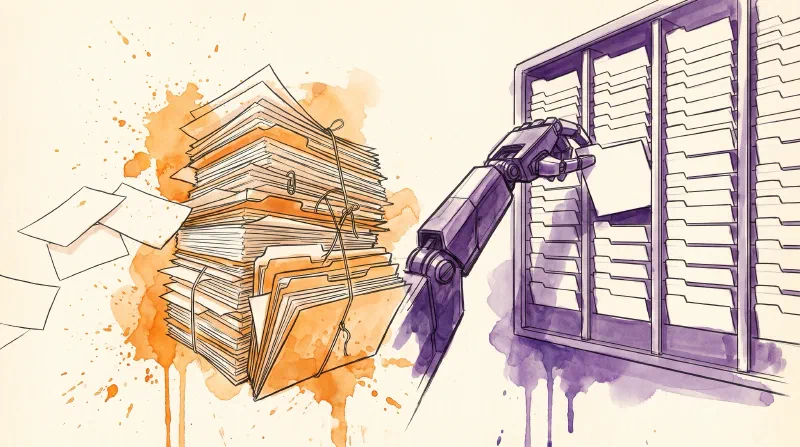
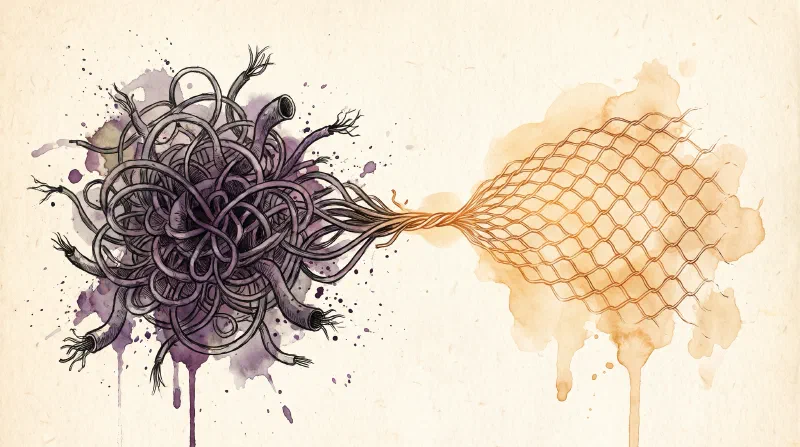
Paperless-ngx stores documents well and classifies them badly, so I turned off its classifier and put a local-AI layer in front of the API. It now files thousands of family documents with a review rate under 2%. Here is how the augment-don't-replace pipeline works, and where it still breaks.
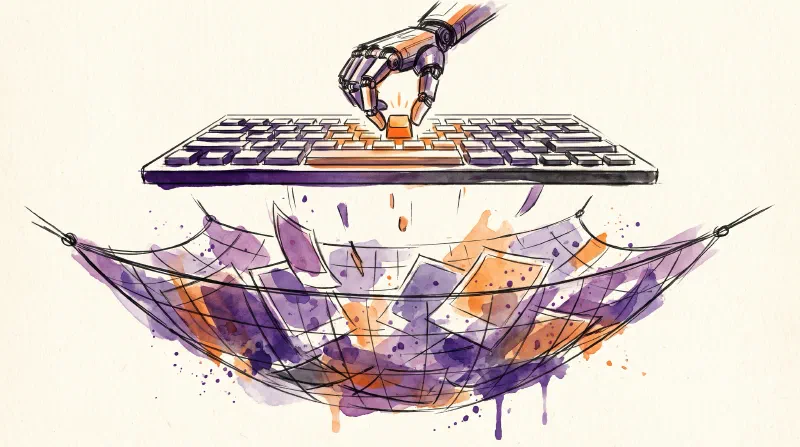
I have been letting AI coding agents run with broad permissions on my own machine, and the safety that holds comes in layers. Make every mistake reversible (rm that lands in the trash, a filesystem snapshot before each run, everything in git), write the rules down where the tool actually reads them, and cage the irreversible at the OS level. Here are the local changes that make yolo-ing code safer, and why a guardrail the agent can shell around, or argue itself out of, doesn't count.
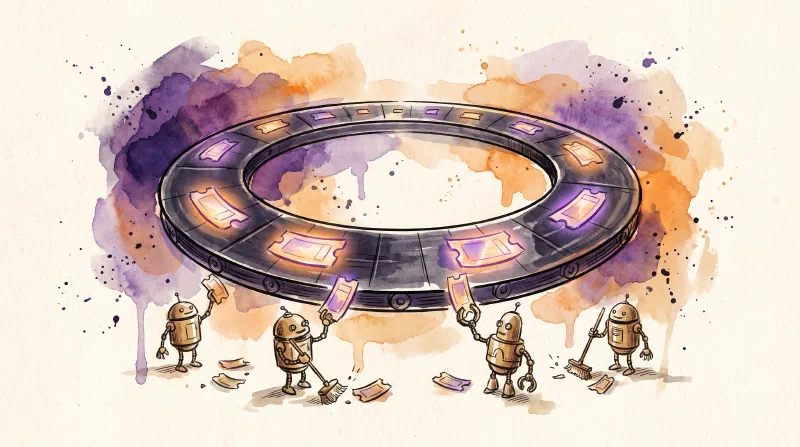
My last post ended where I finally trusted two agent runtimes to push, merge, and deploy on their own. This one is what that trust became: a written policy that lets the loop merge to main unreviewed, and a set of small reconcilers that each exist because one specific thing rotted once. The bottleneck moved again, from cutting the work to keeping an autonomous queue from rotting in the dark.
I have built two systems for handing work to AI agents. The first kept the queue in the repository as a status file, where every task paid a bookkeeping tax in commits and pull requests. The second moved it to a self-hosted tracker that Claude and Codex poll every 12 minutes, which removed the tax and left the work breakdown as what breaks.
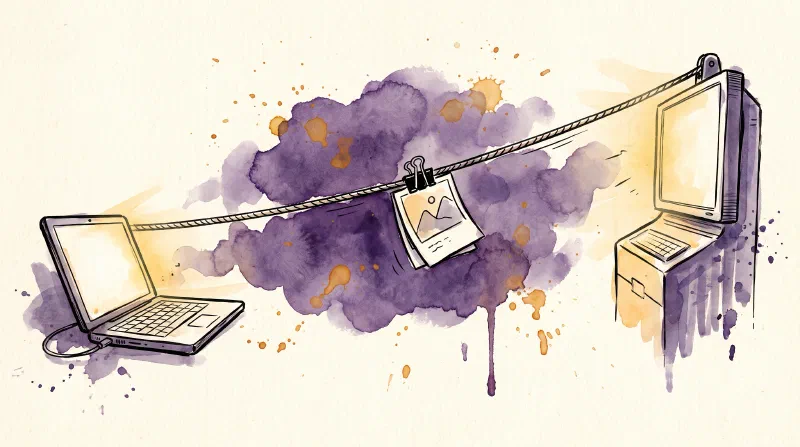
In the workspace post I said pasting screenshots into a remote Claude Code session was the one problem I hadn't cracked. I built the solution. One Alfred hotkey region-selects on the laptop, lands the PNG on the Mac Studio over SSH, and puts the remote path on the clipboard, ready to paste into the session.
My remote access had grown into three overlapping tools: SSH tunnels from the Mac Studio to Unraid, UniFi's Teleport VPN to get a MacBook onto the network, and Cloudflare tunnels for a quick SSH in or for networks that block the VPN, like a cruise ship. All three worked, and all three needed maintaining. Tailscale collapsed them into one overlay for private device access with zero trust by default, and left Cloudflare only the job it's actually for: public ingress.
Where authorization decisions live, in one central service or in every service that owns its data, is an argument every platform team has and never settles. The policy, the evaluation, and the data a decision needs can each be centralized or not, independently. Here's the decomposition, what OPA, Cedar, and Zanzibar each centralize, and how to choose.
A service mesh proves one service is talking to another. It does nothing to carry the user's identity through the downstream calls, so deep in the call graph authorization falls back to 'it came from inside.' Here's how to carry the caller through every hop, and where the chain legitimately breaks.
A secure enterprise that issues no laptops and runs no VPN, where people work from their own devices, is buildable, but only by dropping two assumptions: that the device is trusted and that the network is. The endpoint becomes a window onto data that never lands on it, access goes per-app instead of per-network, and identity does the work the perimeter used to. Here's how it fits, and where you still need a managed machine.
Slow access is why environments end up over-provisioned: when a ticket takes three days, the rational move is to hoard every permission you might need and never give it back. Build paved roads instead, fast self-service access with automated approval, and people let go of what they don't need because getting it back is cheap. The environment locks down harder, and security gets the approval chain and audit trail for free.